
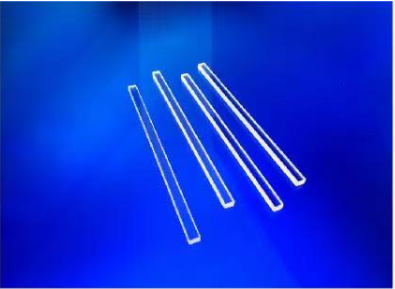
 |
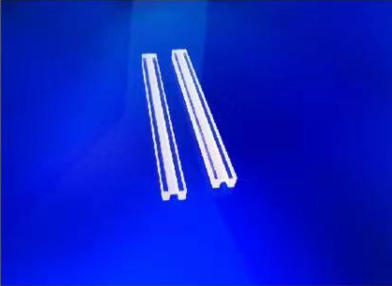
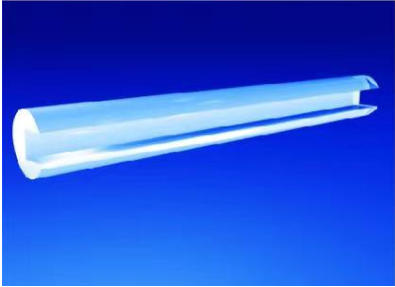
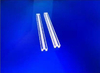
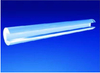

Finewin wafers
Introduction of materials
The sapphire heat dissipation substrate and heat dissipation trough of our laser beam combator are all made of α-Al₂O₃ single crystal sapphire with a purity of 99.999% or more as the core substrate.
Sapphire also has excellent optical transmittance in the wide spectral range of 190nm to 5μm, perfectly combining the three core characteristics of high thermal conductivity, high rigidity and low laser loss. It is the preferred material for high-end thermal management in high-power laser beam combination scenarios.
For products of different power levels, we also offer gradient selection solutions: For medium and low power combiners, conventional C-direction sapphire substrates are selected to balance performance and cost. High-power beam converters above kilowatt level adopt low-defect and high-purity sapphire crystal ingots, keeping the dislocation density within 500 per cm², further enhancing the laser damage resistance threshold and meeting the strict requirements of long-term high-load operation.
Physical parameter
Item | data |
Material | Sapphire |
20°C Density (g/cm3) | 3.98 |
Melting Point (°c) | 2040 |
Moh's hardness | 9 |
Heat conductivity (W/m·K) | 25–35 |
Coefficient of thermal expansion | 5e-6/K |
Advantages
1. Its heat conduction capacity surpasses that of quartz, fundamentally solving the problem of high-power light leakage and heat accumulation.
2. High hardness, batch assembly, rework and repeated clamping are not easy to scratch the channel, and have good long-term optical path consistency.
3. High-temperature resistant, thermal shock resistant, and no deformation during continuous long-term high-power operation;
4. The mid-infrared has a wider light transmission range and is universal for multi-wavelength industrial beam combinations (915/976/1064nm).
What we can do:
1.Heat dissipation carrier (core)
2. Precision V-groove/step groove
3. Window/isolation base
Who need them:
1. Industrial fiber laser beam combination, power ≥800W - 3kW;
2. The multi-beam pump light coupling results in a large amount of light leakage at the fusion joint.
3. Long-term continuous working, water-cooled /TEC refrigeration and heat dissipation structure;
4. Multi-wavelength (visible light + near-infrared) beam combining system;
5. The equipment requires a long service life, low rework, and zero tolerance for optical fiber burnout.
