
 |


Finewin wafers
Introduction of materials
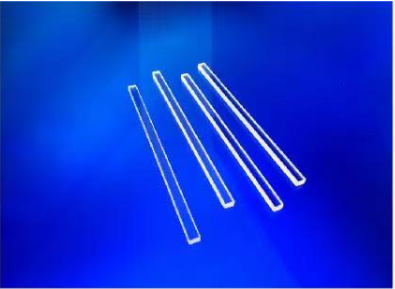
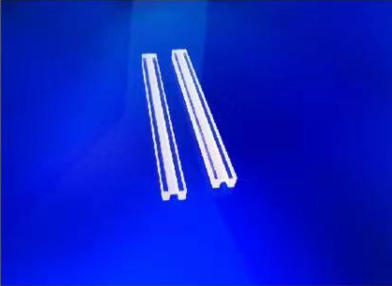
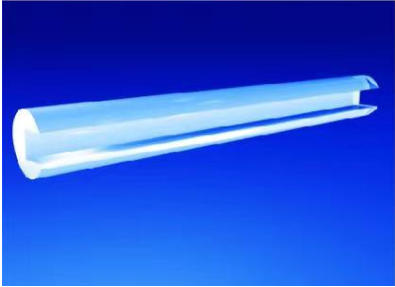
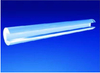
The quartz heat dissipation base plate and heat dissipation trough of our laser beam combator are all made of high-purity fused quartz with a purity of SiO₂ ≥99.99% as the core base material.
This material is made from carefully selected gangue quartz as raw material, which is melted at a temperature above 1800℃ and then rapidly cooled and solidified. It completely avoids the problems of many impurities and poor thermal stability of common quartz materials. Its coefficient of thermal expansion is less than 1/20 of that of common metals. It hardly deforms within a wide temperature range of -40℃ to 800℃. At the same time, it has extremely low laser body absorption characteristics, fundamentally avoiding the risk of local heating under high-power laser irradiation. It is an ideal base material that takes into account both optical compatibility and heat dissipation performance in laser beam combination scenarios.
Physical parameter
Item | data |
Material | Quartz |
20°C Density (g/cm3) | 2.2 |
Softening point(°C) | 1670 |
Annealing point(°C) | 1210 |
Deformation point(°C) | 1110 |
Heat conductivity (W/m·K) | 1.4 |
Coefficient of thermal expansion | 0.55e-6/K |
Advantages
1. It has extremely small thermal expansion, minimal fiber positioning offset when the temperature changes, and good optical path stability at low power.
2. Deep ultraviolet has better light transmission, and quartz is preferred for ultraviolet pump beam combination.
3. The slotting, polishing and drilling processes are mature and cost-effective, making it suitable for batch use of civilian and medium and small power lasers.
Who need them:
1.The total combined beam power is less than 300W, and it can operate continuously.
2. Ultraviolet band beam combination, lithography, and low-power light sources for scientific research;
3. Pursue low cost and large-scale mass production;
4. It has very little light leakage and no obvious thermal load.
